Three External Linking Strategies

Many savvy business owners along with content marketers understand the importance of external links since they are a crucial ranking factor as evidenced by studies every single year, such as the brand and how strong the trust signal is from there, and other websites of higher quality. Where many businesses will stumble, however, is by using the internal links to link the equity to where it will have the biggest impact.  Interla links won’t get you link equity like the external ones do, but they’re good for boosting the traffic to pages. You want to know how to put it together, and here, we’ll give you some linking strategies.


These links should have a shallow click-depth, include to the main content of your page, the keywords in the anchor text should have a reasonable number of links within the page, and from there, you’ll be able to put together the important links that work with this.  You need one of these since it will help you get more information to your visitors, help get better crawlability, and from there, increase the traffic to those that are higher converting and bring you more results.

Using internal links for high search volumes is a good strategy, to begin with since it will help give you a landing page style that will help you persuade, convert, and attract the leads that you have going on.  However, you should make sure that they rank to the home page because that’s how you will improve this.
Then there is using the internal links to target the mid search volume keywords in order to drive the traffic to key landing pages. This is a strategy that you want to have it links to products, and this works for comparison posts, blogs, and other such.  you’ll be using different links to get people to visit information externally within an internal article.
The final one is to use your target keywords to hit the low-traffic pages. When you work with a narrow type of niche, and you want to drive your leads to bottom-level pages, such as your blog posts or product listings, this is the best way to do it.  You can include copy images that can be linked organically to the other bottom-level pages. This will allow the users to see the big picture when they get multiple products or consume numerous pieces of content, so you can create a multi-part blog for example that gives internal links or product pages that do link to other product comparisons along with DIY pages that you can build with these.
The less keyword competition, the more likely pages will rank. So remember this when you’re looking to use this one.

From here, you can assess which one will work for you, and from there, generate the content that works for you. you’ll be amazed at the difference that this makes, and the results that you get from your strategies at hand and the results generated.
Loyalty and SEO

Did you know that your loyalty and customer interactions can build your SEO? There is a link to his, and many times, people don’t realize how important this is.  This post will discuss the importance of loyalty, SEO, and why they matter.

For starters, loyalty is a big part of brands. If a brand doesn’t have some kind of loyalty, they’re not going to get results. There are many people who will say that they have heard of a brand, but they may not invest in it, and some customers will get sniped from brands simply because the other has more loyalty.


It stinks, but it’s a fact of life.

When it comes to loyalty and SEO, you need to look at both sides of the coin, and from there create a better, more rewarding campaign for yourself. The best way to do this is through the use of reviews.

Reviews are your first step, and they aren’ hard to get. The simplest way to do so is as follows: first, you get the sale, then you deliver and fulfill the order of the product, and then, you can send out a loyalty card or email that asks for a review, and that you appreciate them. The customer review, and if it’s good, then the transaction is done. If thee are issues, you should as the leader of the bran,d handle all of these in the most professional of ways.

If you’re not handling it with this mindset, you won’t get loyalty.

At the same time, you can also offer incentives to have people choose your brand. For example, loyalty cards, or even coupons for their next purchase, will communicate to the other person that hey, you still care about them, and you want to be there for them. If that’s the case, you’ll definitely want to make sure that you do take the time to give them these offers and do for them the service that you want to give to them. If you notice that they are a bit worried about something, you can handle different queries. If you want to, you can also put out a special brand newsletter that can be used for you to promote to the customers, and you can set up a loyalty campaign that works in your favor.

Loyalty plays a big part. When people look at you and your brand, they’ll see it for what it is, and they’ll be proud to have this brand in their life. If there are issues, they’ll defend you, and they will want to work with you. it’s good that, if possible, you do handle any issues that might be there, and in turn, work to promote the brand loyalty that you want to, and the one that you deserve in order to get the customer repute and the loyalty that you want to have, and the brand awareness and trust that you desire not just from your products, but from your customers.

Why blog Content is Necessary for eCommerce websites

Content marketing is mostly about B2Bs, but if you’re trying to hit the local market, you also need content. This will build trust, authority, and the rankings on search engines, drive the traffic from your search in an organic manner, and from there, build the awareness of the brand and loyalty as well.

It also helps generate leads, and it’s good across all types of business. E-commerce brands can and will get a slice of the pie of this.


Content provides answers, and it will help with those search results. Everyone wants answers, and if you give these answers via blogging, that’s a big thing. If you do it correctly, without selling, it builds trust in other people, and they will want to work with you. Customers, fro there will move to sales much more quickly.

It also increases the site traffic. If you want to get more people to come to your site, you should have bogs, since it will get more indexed pages.  The more pages indexed, the more chances you’ll have better rankings. Every time you public a blog that’s keyword optimized, this creates a path for those looking for keyword related content. This will nurture it, and it can transform into sales.

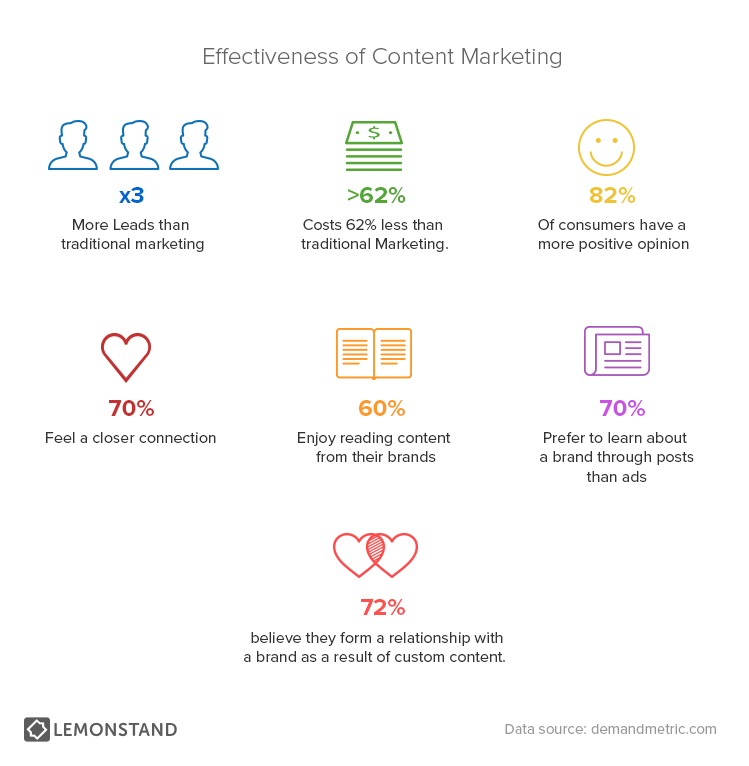
There is also proven success in blogging for e-commerce sites. Shopify, for example, has given customers information on various content.  They corner the profitable keywords within their blogs, and from there, they will create content related to this. That will in turn drive traffic, and drive conversions. People also read blogs before they buy. This is really important in making decisions for customers. 84 percent of people bought products based on how they’re described in the blogs they read one in four people will buy something based on blog content they’ll read. 46 percent said they read blogs to do the initial investigation of products. So if you think nobody will read it, that’s where you’re wrong.

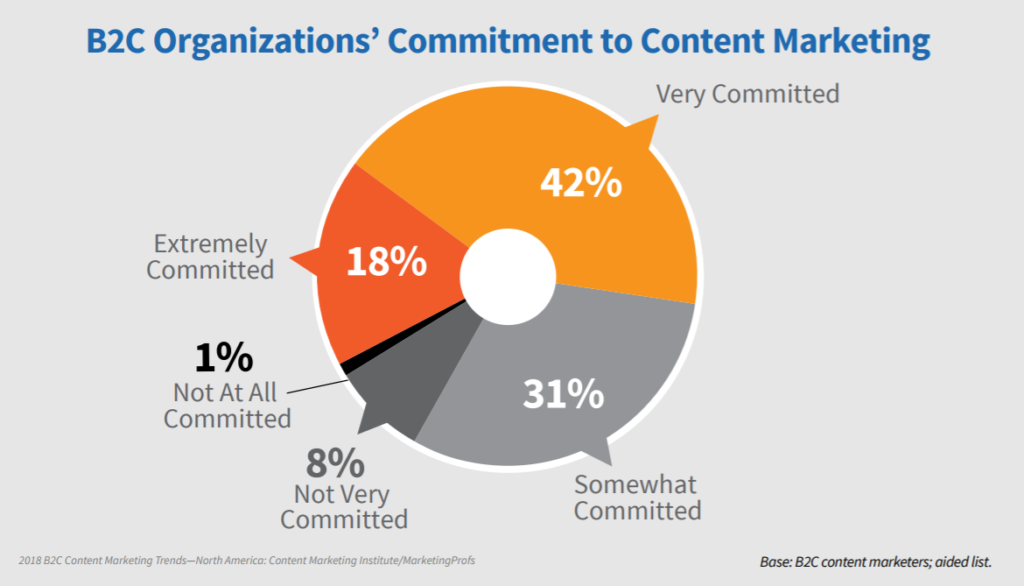
It is also the number one brand-building activity.  There are reports that talk about how blogging and content are the most major ways marketers are building loyalty. it’s actually at the top of most of peoples minds, and 56 percent of customers are increasing their creation budgets, which is the primary area of spending in 2019.

Blogging however is not a one and done though. it’s something you’ll need to build over time. One blog post ever won’t get you what you want. Ou needs to do it for a long time, researching items, outlining, writing, and finally promoting. It does take a long time to build, but here’s the thing if it’s good, it will climb up the rankings and bring others upwards, creating more ROI.

So remember, when you are blogging, it isn’t just a temporary thing, it’s something that you do over time that will ultimately change the way your business thrives. it’s important to use, and something that, when used correctly, can yield great success.

How to Set realistic SEO Targets for 2019

With the new year upon you, you might wonder how you can set up a good means to achieve your goals this year. Well, you’re in luck, for here, we’ll talk about how you can set realistic SEO goals this year through the use of measuring targets, establishing the benchmarks currently, and creating an action plan.


For measuring targets, you want to look at what you’re currently doing, and the growth, customer expansion, retention, or the churn of lowering. When you look at it, most teams don’t know this, but to get on board with your marketing plan, everyone should know the answer to this. Revenue targets are the most common type of marketing targets that you need to look at. This includes looking at the revenue figures and creating targets and the customers that you want. You want to have all of these numbers in place before you even look at the next step since they are the ones that tell you the truth about what you’re getting from your SEO.

Next, establish the benchmarks. You should know the customer numbers, opportunities, leads, and the visitors that you get, but what percentage of this goal does SEO take on as responsibility. The ability to hit this goal is measured in benchmarks, which determine the brand status.  The SEO share of voice, for example, will tell you how well the bran ranks up based on a fixed set of keywords and topics, and then what percentage does the brand rank on the first page of google. From there, you can use these numbers to create benchmarks and create direct and indirect competitors, helping you to understand the content format types, along with rankings from customers, and the new target channels that are established by customers.

You should look as well to see where the competitors rank, and also any traffic, leads, and opportunities and customers based on each of these channels. You can from here look to see where you’ll end up, and what your current ranking is in your marketing plan as well.

At this point, you also can take the conversion rates, the SERP, and the technical SEO, and from there, you can put together your plan. You should break everything down, creating actionable steps, and you can work with increasing traffic, volume, quality, leads, customer value, and also the quality of customers, but if you don’t have a means to really do this, you’re going to end up not having a lot of success with this. it’s important that, if you’re planning to really do a lot with this, and to really check out what you’re getting from this, you take into consideration all of these factors.

This is the best way to set your goals this year, and if you feel like you’re stuck, you should look at what you currently have, and from there, look to see how this can be bested in the future with this.

How Redirects can Make or Break you

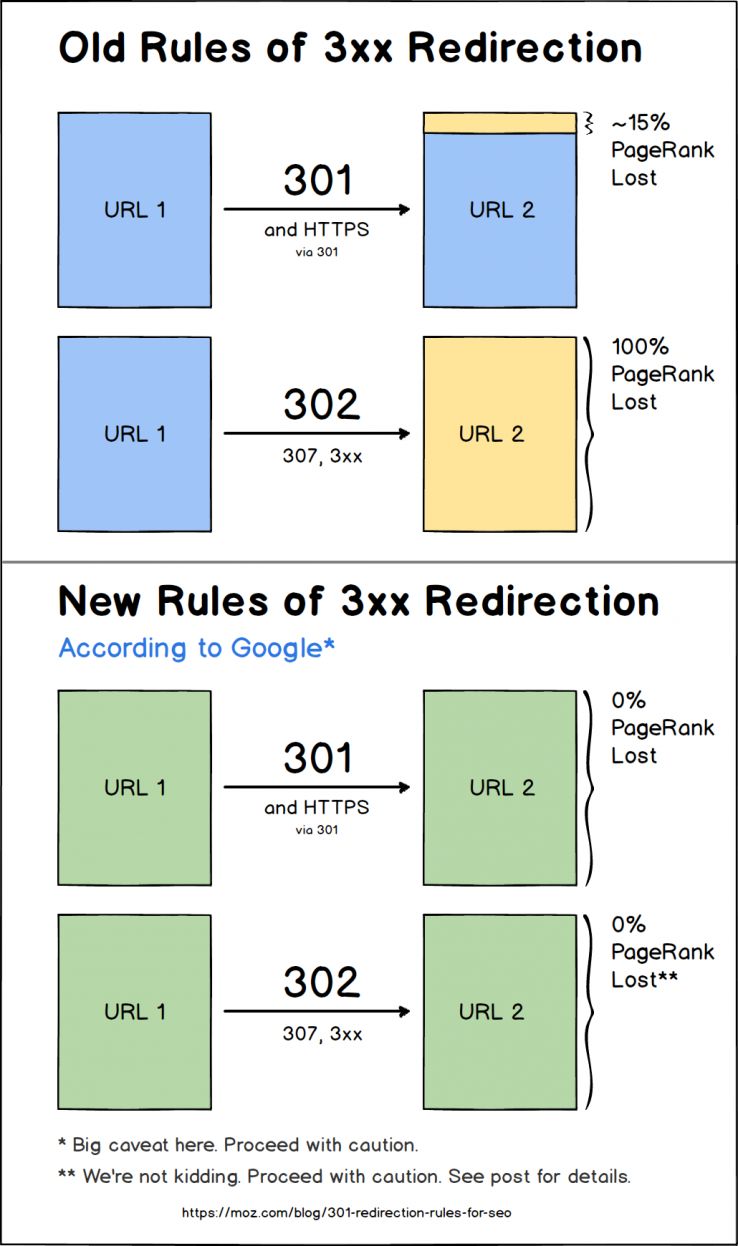
By redirecting correctly, you’ll be able to migrate smoothly, but you need to know of the processes and the rules of redirection. Here, we’ll discuss that and how to set up your URLs successfully.

Migrations are important since they avoid redirection errors, and migration is usually from moving from one point of the site to another.

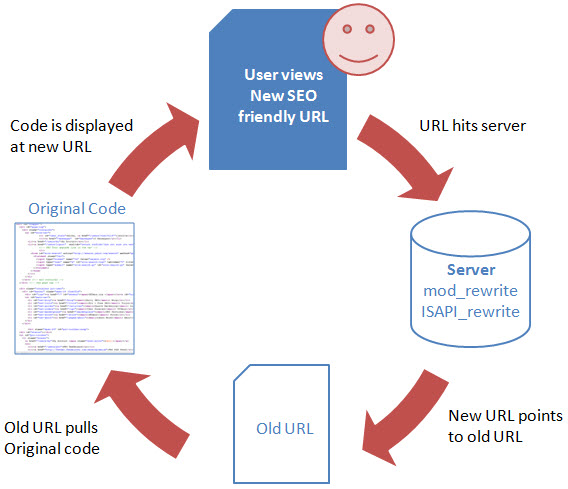
One example of migration is the CMS moving and the URL format, where it can be typing in a URL, and it doesn’t take you to where you want to go, simply because it might be dated or something.

If you change the CMS, sometimes you’ll have more flexibility. If your URLs are structured, you can move it to post or something similar, and moving URLS around will help improve structure and migration.

Also, look at the keywords that you use. Sometimes keywordy or dated URLs can be changed to make them shorter or cleaner, better for humans to read.

Another way to improve this is a content overhaul. If you have a client that comes to you, and you see that their content isn’t giving them the traffic and rankings that they want, sometimes a content audit works, but usually looking at the pages that are redundant, stronger together, and those that don’t serve a purpose, you can filter this out. Sometimes even merging the USL, moving pages about, or dropping them completely will help with this. It can affect how your pages rank, and you want to make sure that you’re doing all of this.

Mistakes do happen with redirects, and if you aren’t touching on this or fixing it, you’re going to have a bad time. For example, unclear ownership does happen if you’re on a bad team or a smaller one that doesn’t know how to handle this. There are situations where the tech will say they can do it, and then they don’t. If it gets dropped, then you can’t take responsibility.

Another reason why this happens is deadlines. Internal and external ones are a big part of this, and sometimes, you may focus on one part of it, but not the other five pages that need redirects, resulting in the migration happening for a singular site, but not for others.

You need to realize that redirects need to be one to one, and not have them go to three pages, but literally just one to one. You should link the URL to one singular location for every single one to one.

With this as well, watch out for loops and redirect chains. You should keep them anywhere from 3-5, and make sure that they aren’t looping back and forth.

Redirects affect your page speed and rankings, and you need to make sure that you can migrate around to the site in an effective manner. By making sure that you’re tacking these aspects, you’ll be able to improve the SEO of the site and help it rank in a more effective manner too.

Mapping SERP Features

Google SERP has a lot of features that help with keyword list creation, and it can help you better understand how to put your topics together in terms of structure. The increase of this in terms of navigation and index has changed the way the web development is. You should look at what features will overlap, and you may wonder how you can change your SEO strategy. Well, read on to find out.

In order to overlap the query space, you want to take a specific word bag approach, and by operating on a SERP-by-SERP analysis, you can see the suggestions and features that are there, filtering stop words, and comparing one to another. By looking at these, you’ll be able to look at the overlaps and the entity overlap between every single feature.

So, there is a lot happening with a few features. 4% of the search suggestions had duplication, so Google is putting a lot of consideration into care into each feature, so you should watch all of them and figure out how to weed out the duplicate content every so often.

Now, the first thing that you’ll want to look at is carousal snippets, which holds the answers to questions thanks to the bubbles that run along the bottom of these. When clicked, the script takes over the snippet and gives a new query. The combination of your original term and text does have a bit of research to it.

The carousal snippet IQ bubbles had the least overlap of the other features since the bubbles typically contained subcategories that live within a higher category level introduced by the search term. It’s a snippet that gives you features and general level, but these bubbles may showcase other distinct keyword suggestions.

There is also the “people also ask” box, which essentially contains four different questions related to the query, and it expands to get the links that Google has pulled from other sites. These are great for long-tail keywords and are awesome for content inspiration so you can target these keywords.

Related searches is another place, and you’ll notice that when you click on them, you’ll see little duplication with the SERO features, which means that they’re oddly unique, and they’re shorter and more iterative of the query originally used, while still staying on topic.

Then there are the people also search for, which allows for after clicking on an organic result and then going back to the SERP page, and there are either 8 or six of these.

These features allow you to utilize different ideas, and it can be used for keywords as well. Google might be running out of different names for them, but understanding the topic hierarchies is important for narrowing out the queries you want to tackle, and by understanding the SERO suggestions, you can work to tackle each of these, and make sure that you’re throwing content that does work with good duplication onto this, no matter what too.

The Social Media Business Leverage

Social media has been super helpful for the last two decades. It used to be a communication experiment, but now, it’s evolved into so much more, and it’s a way to send the message of a brand to the right people at the right time and lets your brand stick out enough to be interested, and loyal. There are tons of benefits to social media, and if you’re not on social media, you should do so now for these reasons.


First, the communication is faster than ever, and easier too, and you can contact representatives faster than ever due to how easy it is, and you can handle grievances faster than ever. There might be some challenges if it’s super technical, but the communication is much faster, and it allows you to not have to deal with customers through the phone.

It also is a networking and partnership hub. It allows you to create a wonderful connection with people, and you can communicate with actresses, athletes, and high-profile people, along with average joes. It allows us to connect and network faster than ever, and this is something that allows you to increase the referrals, get more shoutouts, and even improve branding. Quality relationships are easier than ever with the use of social media

It also boosts your organic visibility, so you don’t have to pay as much to be seen. You can use quality backlinks to the website, and you’ll be able to be more relevant and shareable as well. There is a correlation between social media and search ranking, so even if the shares aren’t full backlinks, the brands, people, marketers, and webmasters will see the content via this, and will link to the content of the brand, and it holds real value.


This, in turn, will increase your brand image, and you’ll reach out to more audiences than ever before, and you can refer customers to you without even needing to utilize a brick and mortar, or even offsite marketing. This will increase with just the use of social media.

Finally, you can get social media feedback super easily, which is a good, yet maybe not so great thing. If you give amazing customer service, and you build experience, you’ll be able to create better customers and a better reputation. Social media allows us to build said reputation by giving us platforms for interaction, and we are getting real feedback from people, and many times it’s more raw. You’ll impress others, and build the opportunity to really grow as a brand, and you’ll be able to put customers at the foreground, and it will build in a real way for the customer base.

So yes, if you’re not using social media, what the heck are you doing? As a brand, you want to utilize this so that you end up getting the best results possible, and in turn, build your image to new heights, since social media is the true power you need.

What Happens when SEO and CRO conflict

Many have spoken about SEO and CRO, which are working towards a shared goal in a sense. Whether it’s business pragmatism, or even increasing conversions, there are many things that bring us together, but it’s rarely simple or unified. How much effort is put into this? Many SEOs do worry about whether the changes will hurt the CROs, and they will mitigate that risk rarely, but the other side does anything to see how SEO impacts CRO. Neither side really looks at the risks of this, and how changes can heart organic searching, but let’s take a moment to discuss this.4


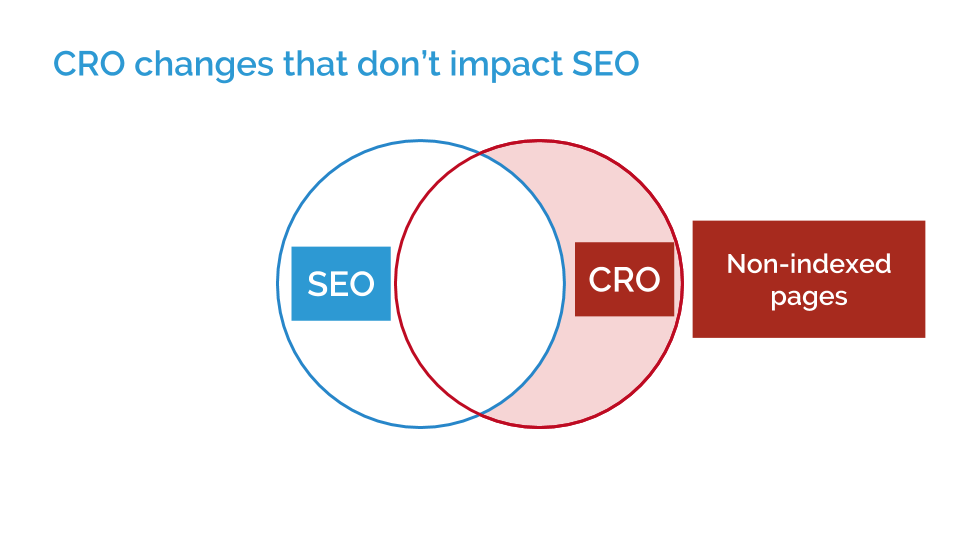
There are SEO changes that have a very low-risk or negative impact on version rates from other channels. For example, if you change the meta information that’s invisible on the page, that’s SEO and rarely changes the CRO. But on the flip side, there are CRO changes that don’t impact the organic search performances. If you do have non-indexed pages, if you change this you won’t change your rankings. You should look at the checkout process and login pages. Those aren’t indexed, so you won’t impact the SEO with that.

However, everything else has a real impact on both of these, but there is real risk there. There are SEO changes which change conversion rates, and CRO changes that have a dramatic impact on performance, so there is an intersection on this.

Many will check this with SEO A/B testing, and from there, check the conversion rate, the SEO, and the full-funnel testing which combines both.

Many times, you’ll want to look at the impacts per each channel, in order to consider whether something is negative or positive. You should, for example, see that if you change the layout of the product page, or show more products, will the conversion rate increase. But, if you decide to run an A/B test on this, it may mitigate some of the risks. You may not get enough though in terms of evidence on this. Most importantly, you wouldn’t throw away an SEO that’s winning that reduced the conversion rate, or a winning CRO that impacted search results. You need to look at the underlying hypothesizes, and any significance on this. Knowing the knowledge that it takes to do this will make it better.

You should get used to testing generally, and from there you should learn the user signals, and the satisfaction and task completion metrics that go along with this. This will allow you to sync up all of this information, and bring forth a better methodology in the process. This does play a part, and you just need to test this in order to make sure you’re not impacting the other too terribly.

Yes, they do conflict. They tend to, and if you don’t realize this, you’re going to end up quite burned, and it could impact the future of this in a negative sense, and in other different ways for you too.

What Really Matters in Terms of SEO this Year

Gone are the days of ghostwriting to create new blog articles, but instead, SEOs don’t rely on repurposing more information that you may find otherwise, but instead, they uses different means to create content. Google has changed the rules when it comes to content quality, along with authority to ensure what owners must do to seem trustworthy.

2018 was the year Google got more and more strict about analyzing the trustworthiness of the domains and web pages. In past years, even making tiny tweaks to this could be enough in SEO performance, even if the site isn’t an authority. Those types of on-page optimization tactics don’t do enough when it comes to obtaining the top search results, especially if the website has other issues related to trust and quality.  Google is now focusing on the repute and quality of the site, and the authority of the content, and it has also placed higher importance on the experience of the user, and using mobile-first indexing is a huge part of this.

If you want to change this, the best way to do it, is to look at the on-site and off-site issues that are there, and from there, you can look to see if some places have issues in terms of authority, or if the entire domain is in question. You can look at the content of pages affected compared to competitors, and you can check to see if it will answer the query of the search within the correct vocabulary and page structure.  Doing a site search is another step that’s used to determine the organic footprint, since it’s common to find pages of lower quality because of the index being removed or merged. You can look at reviews of the website itself, and try to change it so that it’s more trustworthy.

The biggest thing to take from this this year is to realize that your  repute as a website and the content, especially either your money or life sites, and make it so that you have more expertise, and less mediocre content.  It will require more time and effort than before, because hacks in the short term don’t lead to SEO success on a sustained front.  There are company and individuals that should focus on their search presence, and keep an eye out on their online reputations, and from there take the steps to bring forth more credibility and trustworthiness, whether that be from listening to customers, and addressing concerns across platforms, or even just not overwhelming others with advertisements for calls to action. You should create easy means for customers to get in touch if there is a problem, and incorporate the feedback on how they should operate their business.

These are easy to achieve, but you can look through what you have, evaluate and make informed decisions, and since search engines are catching up, you need to better optimize the content you’re making for your traffic too.

Things you Need for Your SEO Blog

Building a website takes hard work, dedication, and research, and it can be daunting to assess everything that you need at the beginning to ensure that others are doing their job. Creating the best SEO checklist doesn’t mean putting in the rankin factors at once, but instead implementing all of the factors that will help you with getting traction regardless of level of skill.

If you aren’t doing this with a professional starting out though, I do suggest making sure to have a professional on hand for this.

First thing, is to keyword target and research. If you don’t do it to figure out what you can rank you are going to lose money. You should do a competitor analysis as well, and and from there see which ones your competitors are using the most.

Next, you should look to see if you’re optimizing for keywords. The answer to this can be surprising, since usually people will do audits that stick out, and the client didn’t optimize for keywords at all. Contrary to the belief systems by those who don’t realize what they’re doing, keywords aren’t bad, ti’s stuffing which doesn’t work. You should make sure they are properly optimized, and you should have it in the meta description. After all, you want Google to find you, right? You can dilute the ability of your page to compete in search results if you don’t have these.

You should, with your keywords, make sure to optimize them by having them work effectively and use any synonyms along with antonyms related to this. You should make sure that you optimize for the competitive keywords too, and when you target this, you should make sure that you use search volume, since the higher that is, the more competitive the keyword is, usually with few exceptions. You should go for keywords that are medium in terms of being competitive so that you’re not just gong for something easy, but instead a realistic means to get engagement.

Finally, you should figure out if word count has any consideration on the blog. You should consider how much you are putting out, and the quality versus the competitors. The competition analysis of the usual SERPs will reveal what the competition is saying, and the word counts are important, along with the quality of blogs that are being posted every single month.

The best way to beat the competition is to mirror what they’re doing, or reverse-engineer and make the content better than what they currently have. You should try to use an SEO content template to analyze what you currently have, see what the competitors are doing, and from there, create content ideas that will allow you to beat them, and in turn, you can focus your blog around this.

All of these factors are different elements that you should definitely consider if you’re thinking of putting together a blog since they all play major roles in you rSEO.